
Technical Specifications of Spiral Welded Steel Pipe
Technical Specifications of Spiral Welded Steel Pipe are the foundation for designing safe, durable and cost-effective pipeline systems, and understanding these details helps engineers, contractors and project owners choose the correct product for each application. When the technical parameters are clearly defined and properly controlled, spiral welded steel pipe can perform reliably for decades under demanding operating conditions.
Standards and Steel Grades
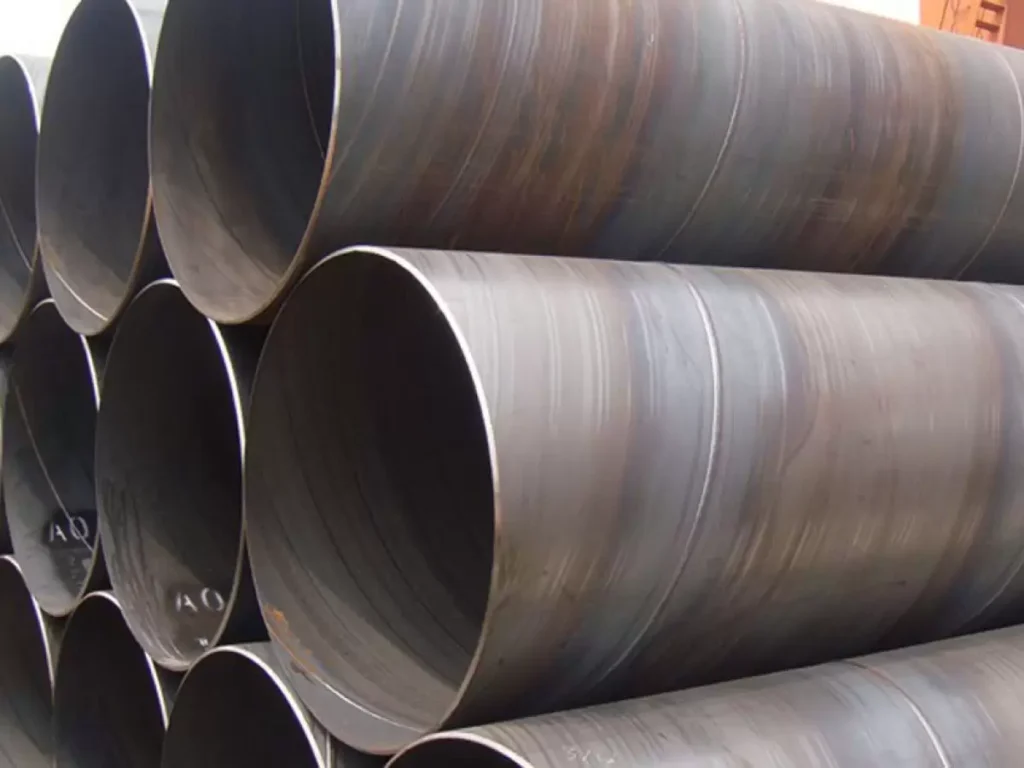
Spiral welded steel pipe is manufactured according to international and national standards that define chemical composition, mechanical properties and testing methods. Commonly used references include API 5L for line pipe, EN 10219 and EN 10224 for structural and water pipes, as well as various ISO and national standards. These frameworks ensure that the pipe’s strength, toughness and weldability are suitable for oil, gas, water and structural projects.
The steel grades used for spiral welded steel pipe typically range from mild carbon steels to high-strength low-alloy (HSLA) steels. Depending on project requirements, yield strength can vary from around 235 MPa to more than 550 MPa. Selecting the right grade involves balancing cost, required pressure rating, environmental conditions and welding behaviour. Higher strength grades allow thinner walls for the same pressure, but must still provide adequate toughness at operating temperature.
Dimensions and Wall Thickness
One of the biggest advantages of spiral welded steel pipe is the wide range of diameters that can be produced on the same equipment. Pipes can be manufactured from relatively small diameters for industrial systems to very large diameters for major water transmission or cross-country pipeline projects. The flexibility of the forming process makes it easy to adjust the spiral angle and achieve the target outside diameter.
Wall thickness is another critical parameter in the technical specifications of spiral welded steel pipe. It is selected according to factors such as internal pressure, external loads, burial depth, traffic loads, soil conditions and potential external overpressure. Standard thickness series can be used, or special values can be defined when necessary. Correct calculation of wall thickness ensures that the pipe has adequate safety margins against yielding, buckling and fatigue.
Dimensional Tolerances
Dimensional tolerances define how much deviation from the nominal size is acceptable. For spiral welded steel pipe, tolerances typically cover outside diameter, wall thickness, out-of-roundness, straightness and pipe length. These values are usually taken from the governing standard or project specification and are essential for good field weld fit-up and smooth installation.
Controlling dimensional tolerances requires precise forming equipment and regular measurement during production. Automated diameter gauges, ultrasonic thickness measurements and manual checks are used throughout the line. When the technical specifications of spiral welded steel pipe clearly describe these limits, it is easier for the manufacturer to maintain consistent quality and for the installer to achieve trouble-free assembly.
Welding Method and Weld Quality
Most spiral welded steel pipe is produced using double-sided submerged arc welding (DSAW or SSAW). In this process, a welding wire and flux are applied to the joint, creating a deep, high-quality weld with excellent mechanical properties. Internal and external weld passes are performed to ensure full penetration and strength equal to or higher than the base metal.
The welding parameters, such as current, voltage, wire feed speed and travel speed, are defined in detailed welding procedure specifications. The technical specifications of spiral welded steel pipe often include requirements for weld toughness, hardness limits and permissible repair procedures. Proper control of welding conditions is vital for achieving a sound, defect-free seam that can withstand pressure and environmental stresses.
Non-Destructive Testing and Inspection
To verify internal integrity, spiral welded steel pipe undergoes extensive non-destructive testing (NDT). Automatic ultrasonic testing (UT) is frequently used to examine the weld seam along the entire length of the pipe, detecting potential flaws such as lack of fusion or inclusions. In some projects, radiographic testing (RT) is specified for additional verification.
In addition to weld inspection, technical specifications for spiral welded steel pipe usually require ultrasonic testing of the plate body, magnetic particle testing for repaired areas and visual examination of the overall surface. Acceptance criteria are defined according to the relevant standards and project documents. This combination of tests ensures that only pipes meeting strict quality levels are released for shipment.
Hydrostatic Testing and Pressure Ratings
Hydrostatic testing is a mandatory step for most pipeline projects. Each length of spiral welded steel pipe is filled with water and pressurised to a value higher than the design operating pressure. The pipe must hold this pressure for a specified time without leaking or showing unacceptable deformation. The test pressure and hold time are defined in the technical specification and depend on the standard and project category.
The pressure rating of the pipe is determined by wall thickness, diameter, steel grade and joint efficiency. Engineers use design formulas to ensure that the selected combination meets or exceeds the required safety factors. By confirming these calculations with hydrostatic testing, the manufacturer proves that the spiral welded steel pipe can safely operate under real conditions.
Coating, Lining and Corrosion Protection
Because pipelines are often exposed to soil, water and aggressive environments, corrosion protection is a vital part of the technical specifications of spiral welded steel pipe. External coatings such as three-layer polyethylene (3LPE), three-layer polypropylene (3LPP), fusion-bonded epoxy (FBE) or bitumen can be applied to protect the steel from corrosion and mechanical damage. Internal linings, for example epoxy or cement mortar, reduce friction losses and protect against internal corrosion.
The specification usually defines coating type, thickness, surface preparation grade, holiday testing voltage and repair procedures. When these details are clearly described, the pipeline owner can be confident that the spiral welded steel pipe will remain protected throughout its service life, even in harsh environments.
Marking, Documentation and Traceability
Proper marking and documentation complete the technical specifications of spiral welded steel pipe. Each pipe length is marked with information such as manufacturer, heat number, size, grade, standard and production date. These markings allow full traceability back to the original steel coil and quality records.
Mill test certificates summarise the results of chemical analysis, mechanical tests, NDT and hydrostatic testing. Project owners and inspectors rely on this documentation to verify compliance with specifications and regulatory requirements. By combining robust technical specifications with reliable production control, spiral welded steel pipe becomes a trustworthy choice for critical infrastructure projects worldwide.